

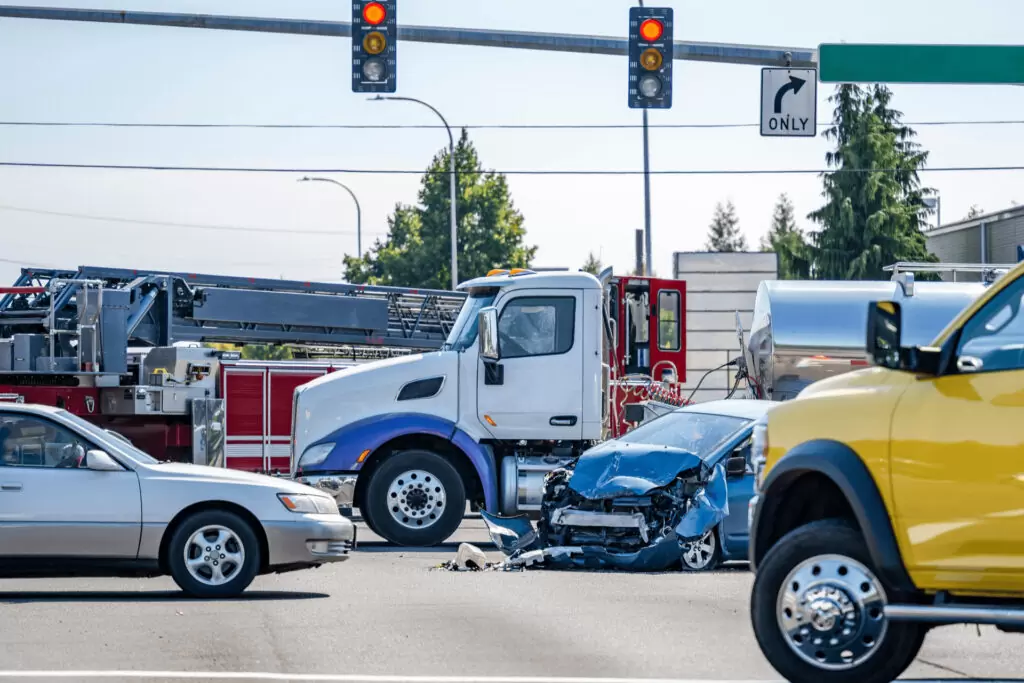
Across Texas, 18-wheeler truck accidents trigger a web of legal and practical questions that most people never expect to face. The vehicles are massive, the injuries are often catastrophic, and the liability rarely stops with a single driver. An experienced 18-Wheeler Accident Lawyer understands how federal rules, Texas law, insurance layers, and aggressive defense strategies all collide after a crash. This article breaks down the most common causes, how responsibility is shared, the regulations that shape these cases, compensation options, and the real-world hurdles victims encounter in multi-defendant litigation. Readers will also see how a seasoned team, such as the Omar Ochoa Law Firm in Texas, builds leverage through early investigation and trial-ready advocacy to secure fair results.
Causes of 18-wheeler accidents on Texas highways in 2025
Texas highways see heavy freight movement in 2025, from I-10 and I-35 to oilfield corridors in the Permian Basin. More trucks on the road means more opportunities for errors, human and mechanical. While every crash has its own facts, certain patterns recur.
- Fatigue and scheduling pressure: Tight delivery windows and night driving can push drivers to the limits. Even when hours-of-service (HOS) rules are followed, cumulative fatigue, circadian disruption, and long stretches of monotony heighten risk.
- Speed and following distance: A loaded tractor-trailer needs hundreds of feet to stop. In construction zones or during sudden traffic slowdowns, that margin disappears quickly.
- Distraction: Phones, in-cab systems, and dispatch communications divert attention during crucial seconds.
- Equipment failures: Worn brakes, tire blowouts in summer heat, or neglected lighting systems can turn a manageable situation into a catastrophe.
- Cargo issues: Poorly secured or overloaded freight affects handling and braking, and can cause a rollover or cargo spill.
- Weather and visibility: Gulf moisture, dust in West Texas, and storm bursts combine with long stopping distances, amplifying danger.
In practice, causes often overlap. A fatigued driver traveling a few miles over the limit in a work zone, paired with marginal brake maintenance, is a common, and preventable, chain of events.
Multiple parties often sharing liability in trucking crashes
Unlike a typical two-car collision, an 18-wheeler crash frequently involves several legally responsible actors. Identifying all of them early matters, because insurance coverage, evidence control, and settlement leverage depend on it.
- The truck driver: Potential negligence for speeding, distraction, fatigue, or HOS violations.
- The motor carrier (employer/dispatcher): Vicarious liability under respondeat superior, plus direct liability for negligent hiring, training, supervision, or unsafe dispatch policies.
- Vehicle and trailer owners: Separate entities may own the tractor or trailer: maintenance or inspection lapses can create independent fault.
- Maintenance contractors: Negligent repair or inspection can be a distinct cause.
- Cargo loaders/shippers: Improper securement or weight distribution creates liability under cargo-securement rules (49 C.F.R. § 393) and common-law negligence.
- Brokers and shippers: Depending on facts and jurisdictional law, negligent selection claims may be viable if safety was ignored, although federal preemption defenses are common.
- Manufacturers: Defective brakes, tires, underride guards, or other components can trigger product liability.
- Government entities: Dangerous road design or missing signage can play a role, with special notice deadlines under the Texas Tort Claims Act.
A simple example: a driver rear-ends traffic on I-35. Investigation reveals long dispatch hours (carrier pressure), thin brake pads (maintenance lapse), and a trailer loaded over axles (shipper/loading error). Liability, and the insurance stack, now spans multiple defendants.
Federal and state regulations guiding truck accident cases
Trucking cases in Texas turn on a blend of federal rules and state law. Knowing what applies, and how to prove violations, often makes the difference.
Key federal regulations (FMCSA):
- Hours-of-Service and ELDs: 49 C.F.R. Part 395 governs driving and rest. Electronic Logging Devices (ELDs) must record duty status: carriers must retain relevant records, typically for at least 6 months.
- Drug and alcohol testing: Post-accident alcohol tests should occur within 8 hours and drug tests within 32 hours when required (49 C.F.R. § 382.303).
- Driver qualifications and training: 49 C.F.R. Part 391 requires medical certification and driver qualification files.
- Vehicle inspection, repair, and maintenance: 49 C.F.R. Part 396 sets inspection and recordkeeping duties.
- Cargo securement and lighting/braking standards: 49 C.F.R. Part 393.
- Insurance/financial responsibility: MCS-90 endorsements and federal minimums (often $750,000 for general interstate freight: higher for oil/hazmat).
Texas law intersecting with trucking claims:
- Proportionate responsibility: A plaintiff more than 50% at fault recovers nothing: otherwise, damages are reduced by their percentage (Tex. Civ. Prac. & Rem. Code ch. 33).
- Statute of limitations: Generally two years for personal injury and wrongful death: shorter notice rules may apply to governmental defendants.
- Evidence preservation: Prompt spoliation letters are crucial. Texas courts can impose remedies, including jury instructions, when a party fails to preserve evidence (see Brookshire Brothers v. Aldridge).
An 18-wheeler accident lawyer will typically chase ELD data, dispatch notes, in-cab telematics, ECM “black box” downloads, pre-trip inspections, maintenance logs, and driver qualification files before they vanish under routine retention schedules.
Compensation options for catastrophic trucking injuries
Because injuries in 18-wheeler crashes are so often life-changing, compensation must account for the full scope of loss, today and years from now.
- Economic damages: Emergency care, surgeries, rehabilitation, prosthetics, medications, home health, vehicle/home modifications, and lost earnings or reduced earning capacity. Life-care planners and economists help quantify long-term needs.
- Non-economic damages: Pain, mental anguish, physical impairment, and loss of enjoyment of life, especially significant in spinal cord injuries, traumatic brain injuries, amputations, and severe burns.
- Wrongful death and survival claims: Spouses, children, and parents may recover under Texas law: the estate may pursue survival damages for the decedent’s pre-death losses.
- Punitive damages: Possible where gross negligence or conscious indifference is proven, e.g., knowingly dispatching a fatigued driver or ignoring critical maintenance.
- Insurance layers: Commercial motor carriers often carry higher liability limits: some operations involve excess/umbrella policies. Plaintiffs may also access UM/UIM or PIP benefits on their own auto policies in certain scenarios.
- Liens and subrogation: Hospital liens, Medicare/Medicaid, and ERISA plans must be navigated to maximize net recovery.
A thorough demand connects liability to human loss with medical proof, vocational analysis, and day-in-the-life evidence, then targets all available coverage layers.
Challenges victims face in multi-defendant litigation
Trucking defendants rarely move in lockstep. They point fingers, fight discovery, and contest fault percentages, raising the cost and complexity of litigation.
- Evidence control and spoliation: ELD and telematics data, dashcams, and ECM downloads can disappear fast. Early preservation letters and inspections are vital.
- Federal preemption defenses: Brokers and others may invoke the FAAAA: courts vary on what negligence claims survive under safety exceptions.
- The “independent contractor” defense: Carriers sometimes argue limited responsibility for owner-operators: plaintiffs counter with agency evidence and federal motor-carrier control standards.
- Trade secret battles: Carriers may resist production of safety policies, driver histories, or telematics data without protective orders.
- Expert-heavy proof: Crash reconstruction, human factors, biomechanics, and trucking safety experts are expensive and often contested via Daubert challenges.
- Venue and removal: Defendants often remove to federal court: plaintiffs assess venue strategy carefully under Texas and federal rules.
- Settlement sequencing: With proportionate responsibility, settling with one defendant can shift leverage and credits as the case approaches trial.
All of this unfolds while injured people are trying to heal. Coordinated case management, timelines, discovery plans, and a trial posture, helps level the field.