

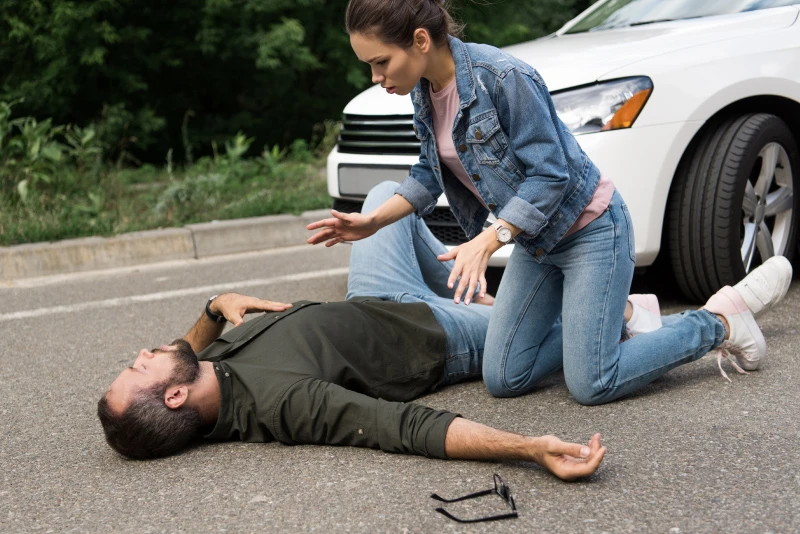
Pedestrian accidents in White Plains don’t just bruise: they can change a life in seconds. Concussions and traumatic brain injuries (TBIs) are common when a person is struck or thrown to the pavement, and the ripple effects, from memory problems to months of rehab, are real. This article breaks down how liability is proven, what compensation is available for medical and rehabilitation needs, and why having an experienced White Plains Pedestrian Accident Attorney matters. Readers looking for local guidance often turn to firms like Tomkiel & Tomkiel Law Firm for help navigating New York’s rules and insurance hurdles.
Pedestrian accident risks on busy White Plains streets
White Plains is a walkable hub ringed by major roads and transit. That’s part of its appeal, and part of the risk. Congested corridors such as Mamaroneck Avenue, Westchester Avenue, Main Street, Hamilton Avenue, Tarrytown Road (Route 119), and North Broadway (Route 22) mix rush-hour commuters, delivery vans, rideshare pick-ups, and people on foot heading to offices, restaurants, and the Metro-North station.
Common patterns emerge:
- Left-turn conflicts at signalized intersections, where drivers scan for gaps in traffic and miss someone stepping off the curb.
- Rideshare and delivery stops near curbs, which can force pedestrians to thread between vehicles or step into the roadway.
- Nighttime visibility gaps and winter conditions, ice, slush, and early dusk, that shorten reaction time.
- Larger vehicles (SUVs and pickups) that sit higher and tend to strike the upper body, increasing the likelihood of head trauma.
A brain injury doesn’t always involve a visible head wound. Even a “minor” collision can throw someone off balance, causing a fall and violent head impact with the ground. Symptoms like headaches, dizziness, light sensitivity, mental fog, or mood changes may take hours or days to show. In busy downtown White Plains, quick documentation, photos, witness contacts, and prompt medical evaluation, can make or break a later claim.
Establishing liability in brain injury pedestrian cases
In New York, liability usually turns on negligence: duty, breach, causation, and damages. Drivers owe a duty to use reasonable care, yield to pedestrians in crosswalks, and follow the Vehicle and Traffic Law. When a pedestrian sustains a TBI, the question becomes whether a driver (or another party) failed in their duty and whether that failure caused the injury.
Evidence that moves the needle
- Scene evidence: crosswalk markings, signal phases, skid marks, debris field, and line-of-sight issues (parked trucks, construction fencing).
- Digital proof: dashcam footage, nearby business security video, bus-cam clips, and traffic cams: event data recorder (EDR) downloads for speed/braking: cell-phone records to address distraction.
- Human proof: eyewitness statements, first responders’ reports, and credible timelines.
- Medical proof: ER records, brain imaging when indicated, neurologist notes, and neuropsychological testing to document cognitive deficits.
Potentially responsible parties
- Drivers and vehicle owners (New York’s VTL §388 can impose owner liability for the driver’s negligence).
- Employers when the driver was on the job (vicarious liability/respondeat superior).
- Rideshare and delivery platforms, coverage and liability often depend on the app/on-trip status at the time of impact.
- Property owners or contractors if site conditions (e.g., a poorly managed sidewalk detour) funneled pedestrians into danger.
- Municipalities for defective signals, obscured signage, or dangerous road design, subject to special rules.
Key New York rules to know
- Pure comparative negligence: even if a pedestrian is found partly at fault (e.g., mid-block crossing), they can still recover reduced damages proportionate to the driver’s fault.
- Claims against public entities: a Notice of Claim may be required within 90 days, and the statute of limitations is shorter than the standard personal injury timeline. Missing these can be fatal to the case.
Preserving evidence early is critical. Seasoned lawyers send spoliation letters for video and vehicle data, file Freedom of Information Law (FOIL) requests, and, when needed, work with accident reconstructionists to model speeds, angles, and sight lines. In brain injury cases, linking the mechanism of injury, impact, whiplash, secondary fall, to the medical findings is often where cases are won.
Compensation claims for medical and rehabilitation expenses
After a pedestrian accident involving a motor vehicle in New York, No-Fault (Personal Injury Protection) typically covers reasonable and necessary medical care and a portion of lost wages up to policy limits, regardless of fault. That initial layer is vital for immediate treatment of concussions and TBIs.
To recover for pain and suffering and full economic losses beyond No-Fault, the injured person must meet New York’s “serious injury” threshold (Insurance Law §5102). Brain injuries frequently satisfy this threshold, especially when they involve objective findings, significant cognitive limitations, or extended impairment.
What medical and rehab costs can be claimed?
- Hospital and specialist care: ER visits, neurology, neurosurgery, and follow-up.
- Diagnostic testing: CT, MRI, DTI when appropriate, balance/vestibular assessments.
- Therapies: physical therapy, occupational therapy, speech-language therapy, cognitive rehabilitation, vision therapy, and vestibular therapy.
- Medications and devices: migraine protocols, sleep aids when clinically indicated, and assistive tech for memory or attention.
- Home and life adjustments: home health aides, transportation, home modifications (handrails, lighting), and return-to-work accommodations.
- Future care: long-term treatment projections documented in a life care plan, plus vocational assessments for diminished earning capacity.
Practical points that protect value
- No-Fault deadlines are short: the application is generally due within 30 days. Missing it can jeopardize coverage.
- Track post-concussive symptoms: journals from the patient and family help explain “invisible” deficits.
- Coordinate benefits and liens: Medicare/Medicaid and workers’ compensation may assert reimbursement rights: No-Fault has its own rules. An organized file keeps negotiations clean.
Experienced counsel will quantify both the “hard” costs (medical bills, future care) and the “soft” but very real impacts, fatigue, sensory overload, memory lapses, that affect everyday life and work.
Role of legal support in ensuring fair treatment of victims
Insurers scrutinize brain injury claims because symptoms can be delayed and diagnostic imaging isn’t always definitive. A strong legal strategy closes that gap with credible proof.
What effective representation looks like:
- Early case framing: secure time-sensitive video, canvass for witnesses, and document signal timing and vehicle paths before memories fade.
- Medical alignment: connect clients with appropriate specialists, ensure consistent documentation, and counter “independent medical exam” (IME) minimization.
- Expert team: neurologists, neuropsychologists, vestibular specialists, accident reconstructionists, vocational experts, and life care planners to translate deficits into dollars and future needs.
- Insurance navigation: coordinate No-Fault benefits, monitor denials or IME cutoffs, and pursue third-party claims for full compensation.
- Litigation readiness: prepare for depositions with symptom timelines and real-world examples (missed deadlines at work, getting lost on familiar routes) that jurors understand.
Local knowledge matters. A White Plains Pedestrian Accident Attorney knows the intersections, the courts, and the regional medical ecosystem. Firms such as Tomkiel & Tomkiel Law Firm leverage that context to anticipate defenses, preserve critical evidence, and keep pressure on carriers for fair settlement, or take the case to trial when needed.
2025 data on pedestrian accidents shaping legal strategies
As agencies roll out 2024 year-end and 2025 pedestrian safety reports, attorneys are mining those datasets to sharpen arguments about foreseeability, speed, and roadway design. While specific figures evolve throughout the year, several data-driven themes consistently shape White Plains strategies:
- Hot-spot mapping: State and county crash maps help identify intersections with recurring pedestrian crashes. Patterns near downtown transit nodes or shopping corridors support claims that hazards were known or should have been addressed.
- Speed and injury severity: Research continues to confirm that even modest increases in impact speed dramatically raise the risk of serious brain injury. Speed data from EDRs, combined with roadway speed limits and traffic-calming measures (or the lack of them), is persuasive.
- Left-turn and night-time risks: Year-over-year datasets typically show elevated crash rates during turning movements and at low-light hours. Attorneys use timing charts and lighting studies to argue for, and about, adequate countermeasures like leading pedestrian intervals (LPIs) and improved illumination.
- Vehicle mix: The growing share of heavier, taller vehicles correlates with more severe upper-body and head impacts. Citing credible statewide and national trend reports helps explain why a particular collision caused a TBI.
Practically, that means building cases with current, local data, NYSDOT’s crash viewer, county Vision Zero materials, and municipal engineering records. Tying a client’s injury to documented, persistent hazards not only strengthens liability but can also support calls for roadway fixes that prevent the next crash.